
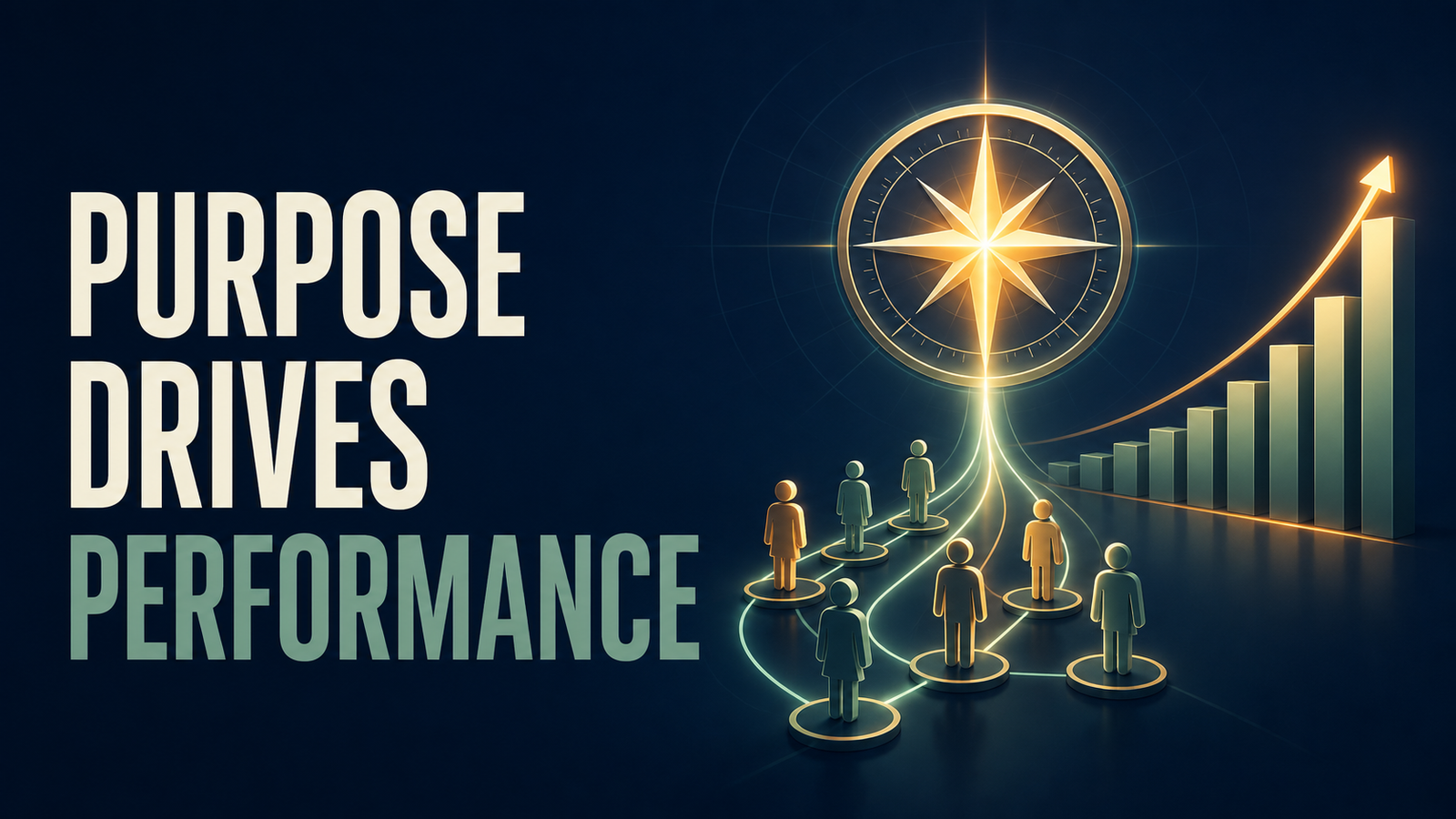
There is a saying that every business owner should hear: an employee works hard for a paycheque, works harder for a good leader, and works hardest when they have a purpose.
That single sentence captures one of the most important truths in business today. Whether you run a salon, a restaurant, or a growing service company, your people are your product. And the difference between a team that simply shows up and one that genuinely excels comes down to one thing purpose.
A Paycheque Gets Them In. Purpose Keeps Them There.
Compensation is the baseline. It gets someone to accept the job offer. But it is rarely what makes them stay, grow, or go the extra mile.
In Winning on Purpose, Fred Reichheld, the creator of the Net Promoter Score, makes this point clearly. What motivates employees is not pay alone. It is being part of a team that is winning, doing meaningful work, and making a real difference in the lives of the people they serve. When employees feel that, everything changes their energy, their commitment, and ultimately, the experience they deliver to your customers.
Culture is What Makes Purpose Real
Purpose does not appear on its own. It has to be built through the culture you create, the standards you set, and the leadership you model every day.
For small business owners, this is both a challenge and an advantage. You have the ability to move fast and connect personally with your team in ways that large corporations simply cannot. But it requires intention.
A purpose-driven culture is one where employees feel seen and valued, where their role has clear meaning, and where leadership inspires rather than just manages. When those elements are in place, employees stop doing the minimum and start doing their best.
The Fit Between Person and Role Matters
One dimension that often gets overlooked is how well a person’s skills, values, and expectations align with their actual role. When there is a strong fit, engagement follows naturally. When there is a mismatch when the job does not deliver what the employee hoped even a strong culture struggles to compensate.
This is why simply assuming your employees are satisfied is not enough. Understanding their actual experience what energizes them, where they feel friction, what would make them feel more capable and committed is what separates good businesses from great ones.
What This Means for Your Business
You do not need a large team or a big budget to build a purpose-driven workplace. What you need is a commitment to leading with intention and genuinely investing in your people’s experience.
When you get that right, your employees stop working just for a paycheque. They start working for something that matters. And when that happens, it shows in how they treat your customers, in how they represent your brand, and in the results your business delivers.
Wondering where to start? An Employee Experience assessment can help you understand what your team is really feeling and what it will take to build a culture where purpose drives performance.